
Curriculum links:
- Biology – Individuality and self-awareness
- Technology – Most phones have finger scanning technology so that the phone only unlocks to a distinctive one
Learning objectives:
- Investigate our fingerprints!
- See how they are unique and used for different identification methods
Materials:
- Ink pen
- Ink pad
- Magnifying glass
- Paper
- Glass
- Make-up powder
- Make-up brush
- Sellotape
- Projector (optional)
- Camera
Safety:
- Be careful with the ink as it can stain hands and also skin. It’s not dangerous but can take a while to wash off!
- Wear an apron or old clothes.
Instructions:
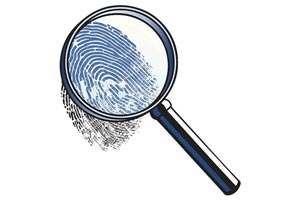
There are a few different ways to engage the children with his topic, depending on access to equipment. The easiest way is to get the children to dip their finger into ink & then blot it onto a page. The children can use a magnifying glass to see the patterns of their own prints.
Teachers can make a game out of this and get groups of children to try and match and guess each other’s prints, the same way police do on crime scenes!
Another way of guessing fingerprints is by using dust. If a fingerprint is on a surface like glass, a light dusting can be gently brushed over it. Children then place Sellotape over the dusted print and gently lift it off. If the class has a camera and projector the children can examine it on a bigger screen and try to identify it against ink prints taken earlier and figure out who did the crime! Use the camera zoom to really take a look at someone’s finger up really close and explain how the fingerprint is made up of depressions and rises like a map and your sweat glands are placed in the ridges. The sweat is what makes you leave prints everywhere you go.
How it works:
What is so special about fingerprints?
Well, they’re unique to each person and no one person has the same fingerprint as another, this also stands for tongue and toe prints! There are three main features of fingerprints…arch, loop, whorl and a couple of very rare ones like the double loop. Without the ridges on our fingerprints, we wouldn’t be able to lift things! They give our fingers the rough surface we need to create the friction that allows us to pick up a baseball or hold onto a pencil to take a test. This is why our fingers get even crinklier in the water, to help us grip things that are wet and slippy! Kids will be interested to learn their fingerprints were on the tiny tips of their fingers long before they born, that they are 100% unique.





 suitescience.ie