
Curriculum links:
- Physics – Forces and gravity
- Mathematics – Statistics
- Art – Origami
Learning objectives:
- Explore how planes steer and fly
- Investigate air flow
- Set up a testing plan to see what difference change makes
Materials:
- Paper
- Paper clips
- Scissors
- Measuring tool e.g. a tape measure
Safety:
- Make sure the children are not left alone with water
Instructions:
This lesson is deliberately open and gives the facilitator a chance to let the children lead the learning.
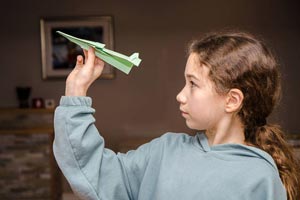
Start off by getting the class to make two paper planes per person or per team. You can have a standard design or else you can encourage the children to explore making their own. The end product however is that they produce two planes that are the same. Having a paper clip on the end of the plane will help the fly further.
Ask them then to do a few (5) test throws of each and record their flight results. Height, length, flight path etc. Have a group discussion about what things you think that you should record.
Then add fins and /or flaps to one of the planes and see what effects that has on the flight? Get the children to record their results and see what they think is happening and why? What should they do next and how does what they’re learning here mean for rockets, spoilers on cars, rudders on boats etc.
How it works:
Gliders
Paper airplanes are gliders. The basic shape of a paper airplane includes wings and a body. The wings enable a plane to push against and sit on top the air its flying over.
What we are exploring here though are the other bits that stick out the: rudders, tails, ailerons and/or flaps. All of these are designed to use the push of the air that they hit to move the rest of the plane and change the flight direction or performance. An aileron can help to turn the airplane whereas a rudder can do this as well as helping stabilise the plane and keep it straight. This is incredible useful and it is a technology used on lots of things that move through air and water.
Rockets!
The purpose of putting fins on a rocket is similar as they allow the rocket to fly in the direction you want it to. A rocket launched without fins would tumble around after leaving the pad, due to the way the aerodynamics and things like wind act upon the rocket, related to the forces that act upon the rocket by the motor and by gravity pulling it down. You’d have a big random rocket much like a balloon.





 suitescience.ie